Replacing a boiler is one of the bigger spending decisions most homeowners make, and once it's in, you live with it for the next 10 to 15 years. The choices you make on type, size, brand and installer shape your heating bills, your hot water reliability, and your warranty position for the whole life of the boiler. This guide walks through the decisions that actually move the needle.
Combi vs System vs Regular
The first decision is the type of boiler. The label sounds technical but the practical difference is just where the hot water lives.
- Combi boiler: Heats water on demand from a single unit. No tank, no cylinder, no roof-space header. Best for flats and smaller homes with one bathroom and decent mains pressure. The most common choice today because it frees up cupboard space.
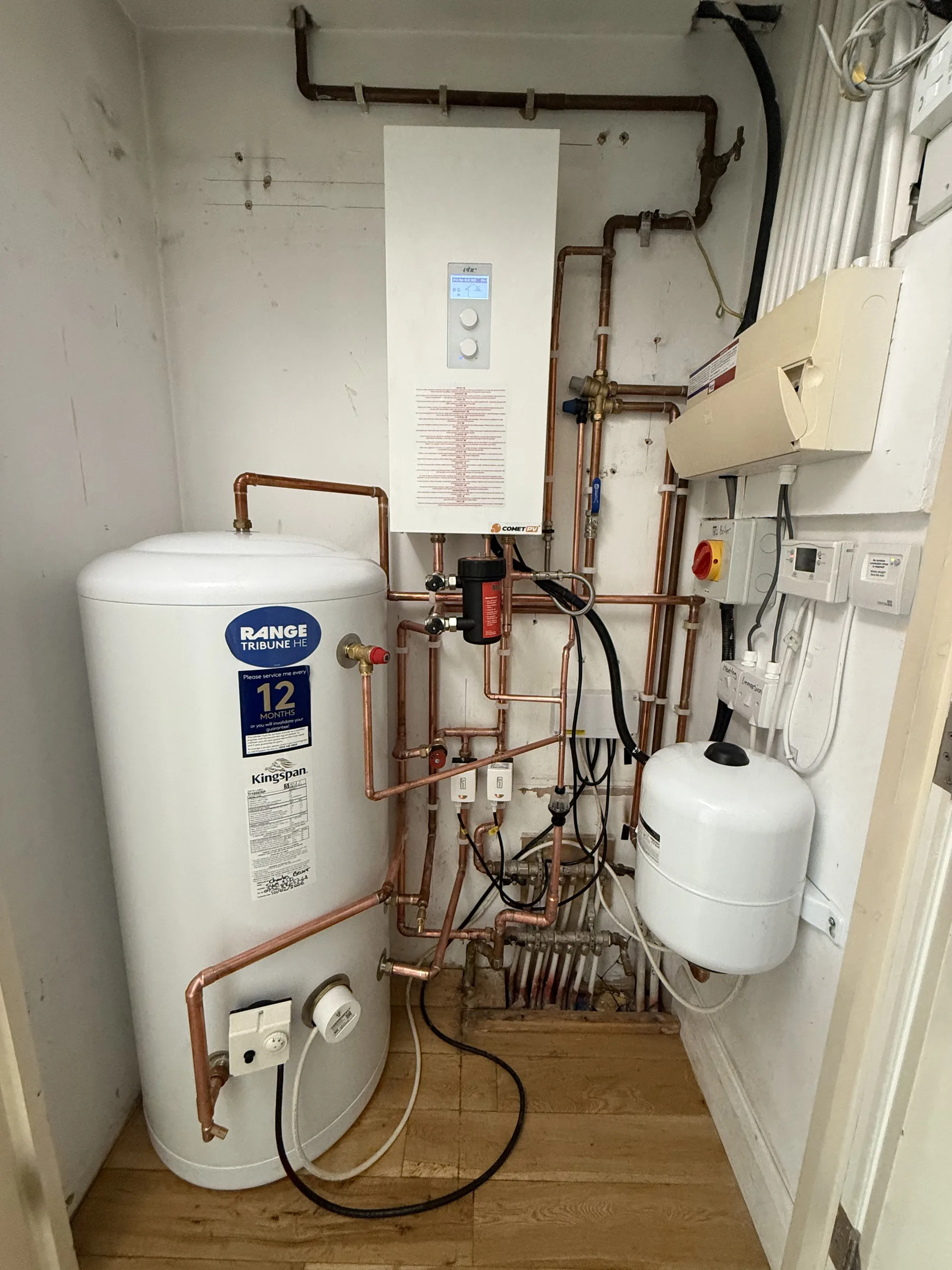
- System boiler: Uses a hot water cylinder but most components live inside the boiler unit. A good middle ground for homes with two bathrooms or larger families where a combi can't keep up with simultaneous showers.
- Regular (heat-only) boiler: Uses both a cylinder and a cold-water feed tank in the loft. Common in older properties on the original installation, often kept on a like-for-like swap because changing type adds cost and disruption.
Sizing Your New Boiler
Boilers are sized in kilowatts, and "bigger is better" is wrong. An oversized combi will short-cycle, run inefficiently, and shorten its own life. An undersized one will struggle on cold mornings and never reach the hot water flow rate the household needs.
Proper sizing depends on the number of radiators, the number of bathrooms, the property insulation, and the realistic peak hot-water demand. A two-bathroom Victorian terrace in Dulwich with single-glazed windows has very different needs from a small one-bed flat in Peckham, even if the rooms are roughly the same size. A real survey of the property is the only honest way to size the boiler.
What a Proper Survey Covers
Any installer should turn up to survey before quoting. A proper visit covers the existing system, the gas supply, the flue route, the controls, and your real-world hot water demand. Specifically, you should expect us to:
- Look at every radiator and check sizing
- Check the gas meter and incoming gas pipe size (some installs need a pipe upgrade)
- Survey the flue route and check it meets current building regulations
- Inspect the existing pipework for scale, sludge, or pressure problems
- Talk through how many people use hot water at once, and when
- Discuss controls, basic programmer, smart thermostat, or weather compensation
A quote written without seeing the property is a guess, not a quote. Walk away from anyone who quotes a boiler installation purely from a phone call.
Thinking about a new boiler? Book a free survey and we'll come out, look at the property, and give you a clear written quote.
Get a Free QuoteWhat a Fair Quote Includes
Most boiler installations across South East London land between £1,800 and £3,000 supplied and fitted. The exact number depends on the boiler chosen, whether the position is staying the same, and how much pipework or controls upgrade is involved. A fair quote spells out:
- The boiler make, model and warranty term
- Removal and safe disposal of the old boiler
- System flushing where needed (chemical or power flush)
- New controls if applicable (programmer, smart thermostat)
- Any required gas pipe upgrade
- Filling, pressure-testing, and full commissioning
- Building Regulations notification
- Warranty registration on your behalf
- Total price inclusive of VAT, with no surprises on the day
On Installation Day
A straightforward swap takes one day. A more involved system change or pipe upgrade takes two. Expect us to arrive when we said we would, dust-sheet the working area, isolate the gas and water, and have the new boiler in and pressure-tested by the end of the working day. We'll talk you through the controls, register the warranty, and leave the working area clean.
Warranty and Aftercare
Modern boilers carry warranties from 5 years up to 12 years depending on brand and model. The catch is that the warranty depends on annual servicing, miss a year and most manufacturers void the cover entirely. Book your first annual service for the same month next year and the warranty stays valid for its full term.
Modern boilers run at around 95 to 98 percent efficiency. Combined with a smart thermostat or weather compensation, the upgrade is often visible on a heating bill within the first cold spell.
Frequently Asked Questions
How long does a boiler installation take?
One to two days for most installs. Larger system swaps or full pipe upgrades may run a day longer. Your installer should give you an exact timeline as part of the quote.
Do I need to be home for the work?
Yes, at least at the start so we can isolate gas and water, and at the end for the controls walk-through and sign-off. The middle of the day, we can usually crack on without you on site if you'd rather not be.
Can I keep my old radiators?
Usually yes. We check radiator condition during the survey. If any are seriously corroded or undersized for the new boiler's output, we'll quote replacement separately so you can decide.
Will I get a Building Regulations notice?
Yes. The installation has to be notified to Building Control under the Gas Safe scheme, and you'll receive the certificate by post within a few weeks. Keep it with the boiler manual, you'll need it when selling the property.
Ready to talk about your new boiler?
Free survey, clear written quote, no pressure. Boilers across Dulwich, Peckham and South East London.
Get a Free Quote